
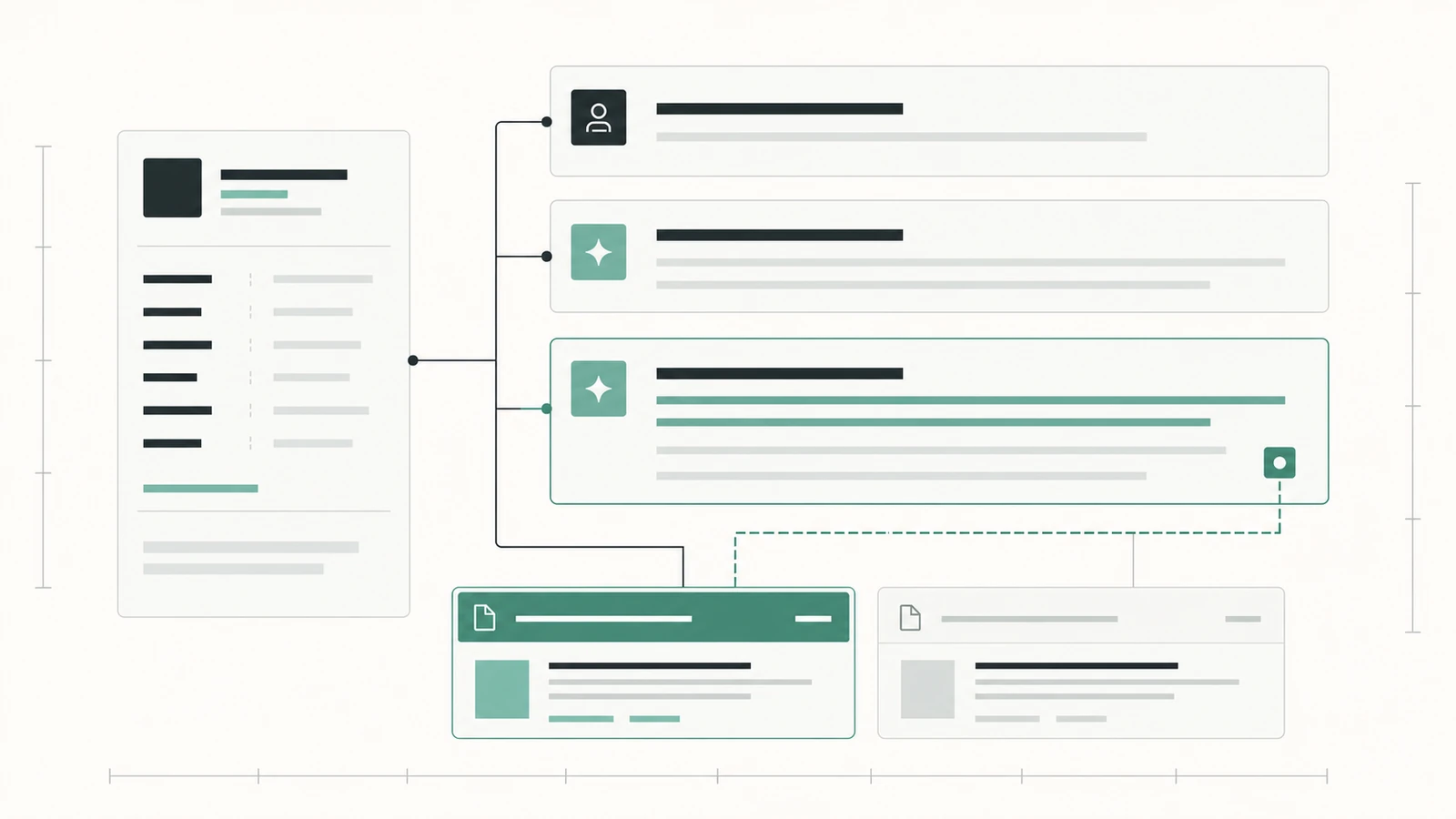
LLM SEO is the work of making an organization understandable and citable in answers produced by large-language-model assistants. Rotgar uses the term for ChatGPT and Gemini visibility: a prompt-led journey measured through mentions, citations, recommendations, competitor presence and the language used about a medical organization.
Is LLM SEO the same as GEO?
LLM SEO and generative engine optimization substantially overlap. GEO is the broader discipline of improving visibility in generated answers. LLM SEO narrows the discussion to conversational assistants powered by large language models, especially ChatGPT and Gemini.
The practical work is largely shared:
- keep important pages crawlable and technically sound;
- define the organization, locations, clinicians and services clearly;
- publish accurate, self-contained answers to relevant questions;
- align visible pages and structured data;
- build a credible source environment;
- measure assistant answers against a repeatable prompt set.
The GEO definition provides the broader framework.
Why is LLM SEO separate from Google AI Overviews?
ChatGPT and Gemini are conversational assistants. A person can begin with a broad prompt, ask follow-up questions and narrow the discussion toward a provider. Google AI Overviews appear inside a conventional Google Search journey and start from search queries.
The foundations overlap, but the evidence is not interchangeable. Door 2 measures Google AI Overview presence and citations query by query. Door 3 measures how ChatGPT and Gemini represent the clinic across prompts and follow-ups. Keeping those results separate makes priorities easier to defend.
What does LLM SEO change on a website?
LLM SEO should make a site clearer for people first. Priority pages need concise answers, accurate qualifications, understandable entity relationships and visible evidence.
For example, a medical group should make it clear:
- which services it provides;
- which locations provide each service;
- which clinicians are connected to the service;
- which claims are clinical, operational or promotional;
- who wrote or reviewed time-sensitive medical information;
- where a reader can verify the supporting source.
Schema can reinforce those relationships, but it must match the visible page. Markup is not a place to add claims that users cannot see.
What happens beyond the website?
An assistant may use sources beyond the clinic’s own domain. LLM SEO therefore includes checking how credible external profiles and publications describe the organization. The objective is consistency and corroboration, not manufactured mentions.
If a source contains outdated or contradictory information, the first task is to understand whether it is influencing an important patient question. If the clinic has genuine expertise that deserves independent coverage, that evidence can support both users and systems.
How is LLM SEO measured?
Use a tailored set of patient-intent prompts for the clinic’s services, markets and languages. Capture whether the clinic is mentioned, linked where a source is shown, recommended, omitted or described inaccurately. Record competitors and the sources used in the answer.
Repeat comparable prompts after approved changes. A single response is an observation; a pattern across the relevant set is a basis for action. See AI visibility measurement for the full method.
What LLM SEO cannot do
LLM SEO cannot guarantee that an assistant will name a clinic or preserve a citation. It cannot insert the clinic into a model through repeated self-prompting. It does not replace Google Search + Maps, and it does not prove patient enquiries without separate business data.
Medical organizations also need an evidence boundary: improving discoverability is not permission to invent clinical answers. Qualified clinical review remains separate from SEO review.
Where should a medical organization start?
Start with the questions most relevant to patient decisions, capture how ChatGPT and Gemini answer them now, and identify the pages and sources behind the gaps. Then prioritize technical access, entity clarity, content quality and credible supporting sources. This is the core of Rotgar’s ChatGPT + Gemini Visibility work.
The free Google + AI visibility audit establishes the starting point across search and assistant surfaces.
Get a free audit or continue with how to improve ChatGPT visibility.