
Ranking in ChatGPT means being cited or recommended when ChatGPT answers questions in your market. You get there by making your brand machine-readable (entity signals), your content quotable (answer-first pages), and your reputation visible in the third-party sources ChatGPT draws from — then measuring citation rate monthly. This work is part of generative engine optimization (GEO). Generative engine optimization (GEO) is the practice of making a brand’s website, content, and entity signals easy for AI systems — ChatGPT, Gemini, Google AI Overviews — to understand, trust, and cite in generated answers. For a clinic, it decides whether ChatGPT names your practice — or a competitor’s — when a patient asks for a recommendation.
TL;DR
- There is no ChatGPT ranking algorithm to game and no submission form. Exactly one control is documented by OpenAI: OAI-SearchBot must be allowed in robots.txt, because “sites that are opted out of OAI-SearchBot will not be shown in ChatGPT search answers.”
- Blocking GPTBot (OpenAI’s training crawler) does not remove you from ChatGPT search; blocking OAI-SearchBot does. Two separate decisions in one file — and the most common technical mistake we see.
- ChatGPT cites an average of 15 sources per response versus about 3 for Gemini (Semrush 2026 AI Visibility Index, 126 million US prompts, January–April 2026) — more citation slots per answer than any other surface.
- In the Princeton-led GEO study (KDD 2024), adding citations, quotations, and statistics improved visibility by 30–40%, while keyword stuffing scored below the unmodified baseline.
- In our own pilot on August 3, 2026 (Perplexity, 4 buyer-intent prompts, 0/4), category answers were assembled from third-party listicles, directories, and Reddit threads — not from brand websites. Off-site presence is the step most brands skip.
How does ChatGPT decide which brands to mention?
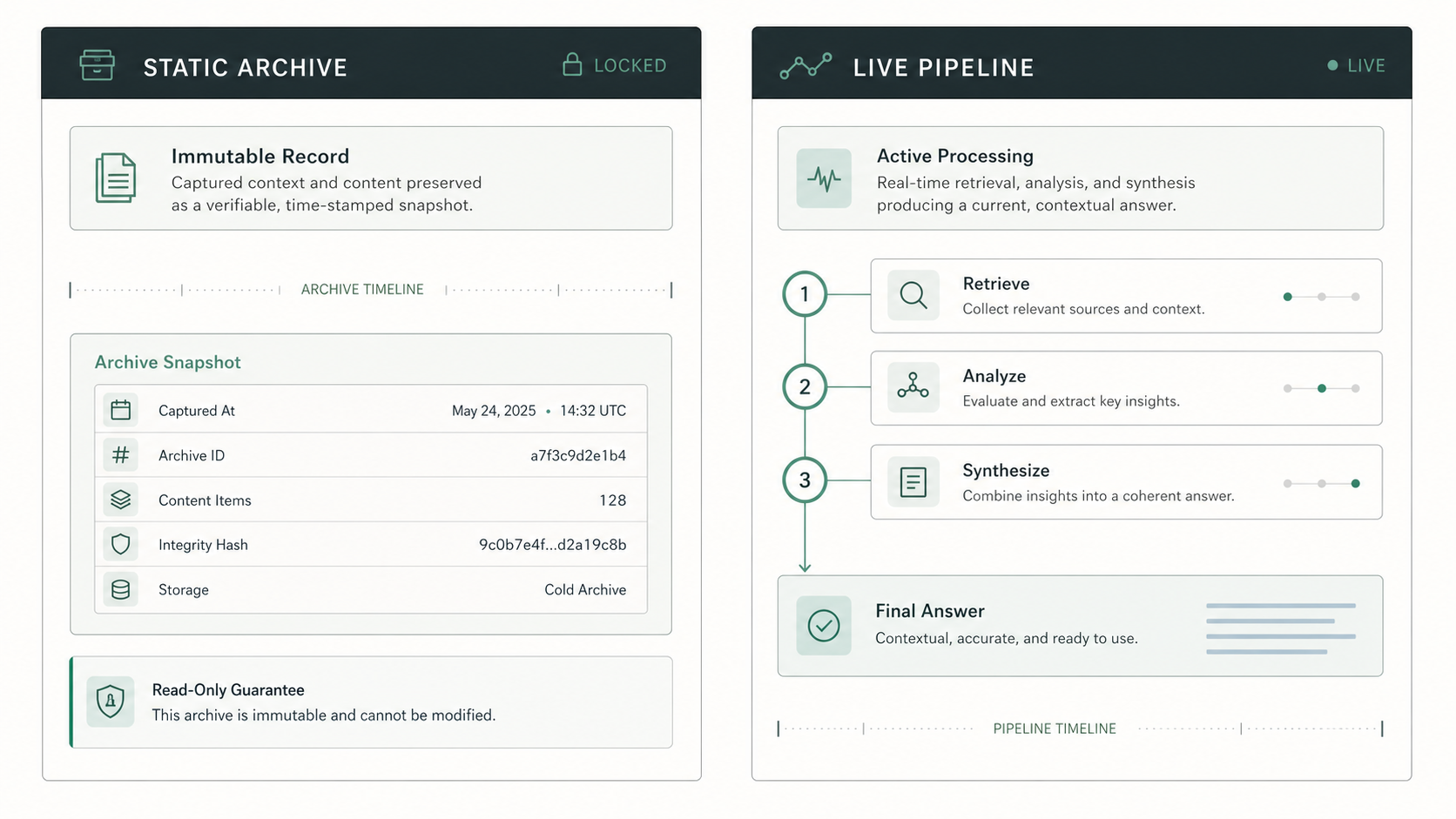
ChatGPT answers from two sources: what the model learned during training and what it retrieves through live web search. Brands it names usually have consistent entity information across the web, content written as direct extractable answers, and mentions in trusted third-party sources. OpenAI publishes no ranking formula for either mode (August 2026).
The distinction is practical. Training knowledge is a historical snapshot you cannot edit; live retrieval reflects what is crawlable and extractable today, and that is where every lever you control operates. The platform mechanics — surfaces, crawlers, robots.txt syntax — are covered in our ChatGPT SEO guide; this page answers the shorter question: what gets you into the answer.
Which factors actually influence whether ChatGPT cites you?
One factor is documented by OpenAI itself (crawler access); the others rest on peer-reviewed research, large-scale correlation studies, or our own measurement — and deserve exactly the confidence their evidence supports. Nobody outside OpenAI knows the weighting. The honest table looks like this:
| Factor | What it means in practice | Evidence behind it | How much to trust it |
|---|---|---|---|
| OAI-SearchBot access | The crawler behind ChatGPT search must be allowed to fetch your pages | OpenAI docs: opted-out sites “will not be shown in ChatGPT search answers” | Documented. The one hard gate — a binary prerequisite, not a ranking factor |
| Cited sources, quotations, statistics | Back claims with named sources and real numbers instead of adjectives | Princeton GEO study (KDD 2024): 30–40% relative gain on position-adjusted word count | Peer-reviewed experiment, on generative engines generally (validated on Perplexity), not ChatGPT specifically |
| Answer-first, self-contained passages | Each section opens with a 40–60 word answer that survives being lifted out of context | Same study: clarity and presentation changes produced 15–30% gains | Peer-reviewed, and consistent with how retrieval answers are assembled |
| Third-party mentions across the web | Being written about — listicles, directories, communities, press — not just linked to | Ahrefs, 75,000 brands: branded mentions correlate 0.664 vs 0.218 for backlinks | Correlation, not causation — measured on AI Overviews, not ChatGPT. Directional |
| Entity clarity (name, description, schema) | The model can resolve who you are, consistently across site and profiles | Our client work plus the answer structure in our pilot | Practitioner observation. Low risk: standard SEO hygiene anyway |
| Breadth of the citation set | ChatGPT pulls ~15 sources per answer; Gemini ~3 | Semrush 2026 AI Visibility Index, 126M US prompts | Vendor research, large sample, methodology published |
| Keyword stuffing | Repeating the query phrase across the page | Princeton GEO study: 8% below baseline, 10% below on Perplexity | Documented negative. Do not do it |
| Paid placement | — | No such product exists in organic ChatGPT answers (August 2026) | Not a factor. Anyone selling it is selling something else |
Two things follow. The only certain way to lose is to be uncrawlable — everything else is probabilistic. And the highest-evidence content lever (cite, quote, quantify) is the one most service-business sites ignore, because marketing copy is written to persuade, not to be quoted.
What are the steps to rank in ChatGPT answers?
Six steps, in this order: measure a baseline, fix entity clarity, publish answer-first content, add structured data, build third-party citations, re-measure monthly. The order matters — steps 2–5 without step 1 produce activity you cannot evaluate, and step 5 is where the unclaimed ground sits.
- Measure your baseline. Fix the zero point before changing anything: a fixed set of buyer-intent prompts, run in clean sessions, scored by citation rate. This is our own protocol: we measure AI visibility the way we sell it: a fixed set of 16 buyer-intent prompts tested monthly across Google AI Overviews, ChatGPT, Gemini, and Perplexity, scored by citation rate. The arithmetic is in our guide to the AI visibility score.
- Fix entity clarity. Your practice’s or firm’s name, address, and description must match across your site and every profile; Organization or LocalBusiness schema should state plainly who you are and what you do. A model only names entities it can resolve without ambiguity.
- Publish answer-first content. Open every section with a direct answer of 40–60 words, then develop it. Definitions, steps, comparisons, and FAQs are the formats that survive extraction. Add the evidence layer the GEO study measured: named sources, real quotations, real numbers.
- Add structured data. Organization, Article, and FAQPage markup give a machine-readable layer on top of the content. The honest limit: schema helps machines parse an entity, but no markup is documented as a ChatGPT ranking input.
- Build third-party citations. Not link mass — citable presence: industry publications, reputable directories, community threads, review platforms. Our own measurement pushed this step up the list, and it is the slowest to compound.
- Measure monthly and iterate. Re-run the same prompt battery, unchanged, every month. A single reading is noise; a trend line is information. The operational version of these steps lives in our GEO checklist.
Each step is verifiable. If you cannot state how you would check it, you have not done it:
| # | Step | How to verify it | Done when |
|---|---|---|---|
| 1 | Baseline measurement | Run the fixed prompt list logged out on each surface; log mention / citation / competitor | A dated citation rate per surface, plus the list of who was cited instead |
| 2 | Entity clarity | Diff name, address, and one-line description across site, Google Business Profile, directories, listings | Zero mismatches; Organization or LocalBusiness schema names the same entity |
| 3 | Answer-first content | Cut the first paragraph out of each H2 section and read it alone | It still answers the heading in 40–60 words, with a named source or number |
| 4 | Structured data | Validate every template in a schema testing tool | Article, Organization, FAQPage parse without errors on all key pages |
| 5 | Crawler access | Check the OAI-SearchBot rules in robots.txt; view raw HTML without JavaScript | OAI-SearchBot is not disallowed; answer text is present in the source |
| 6 | Third-party presence | Search your category as a buyer would (“best X in Y”); list what ranks or gets cited | You know the ~10 sources that own your category, with a dated plan |
| 7 | Monthly re-measurement | Compare this month’s citation rate to last month’s on the identical battery | Two or more consecutive readings; the prompt list unchanged |
Who actually wins the answers you want? Our measurement, August 2026
On August 3, 2026, we ran four prompts from our fixed battery on Perplexity in a clean anonymous session. Rotgar appeared in 0 of 4 answers — citation rate 0%. The zero was expected; the useful output was the list of who was cited instead, because that is the ground you have to take.
| Prompt (verbatim) | What the answer contained | What it cited |
|---|---|---|
| “Who provides generative engine optimization services?” | No brands named on the engine’s own authority — general categories only | Third-party listicles and directories: Clutch’s GEO category, DesignRush, agency roundups |
| “Where can I get an AI visibility audit?” | A list of tools, plus the advice to “look for a GEO audit agency” | SE Ranking, Reddit threads (cited three times), YouTube, tool vendors with free-audit landing pages |
| “Best healthcare SEO agencies” | A table of eight agencies with an incumbent at #1 | That agency’s own listicle, which ranks itself first and assigns itself a self-invented “AI Visibility Score” of 4.9/5 — relayed as data |
| “What is generative engine optimization?” | A definition plus a GEO vs SEO table | Heavyweights only: Semrush, Wikipedia, Coursera, Mailchimp |
Three conclusions changed how we sequence the six steps. Category answers are assembled from third-party lists, not brand websites — consistent with the Ahrefs finding that branded mentions correlate ~3× more strongly with AI visibility than backlinks. Self-published comparative content gets relayed verbatim, invented metrics included; the defensible version of that play is a transparent, reproducible methodology, not a flattering number. Reddit was the second most cited source type in the audit-intent prompt — community answers feed AI answers directly.
Honest framing: this was a four-prompt pilot on one surface from a European IP, not the full US-region, 16-prompt, four-surface run — ChatGPT, Gemini, and AI Overviews require logged-in manual runs, which is why the pilot used Perplexity. The citation rate is provisional; the structural finding — who owns the sources — is what we act on, in AI visibility for medical practices.
What you cannot do to rank in ChatGPT
- You cannot buy a citation. There is no paid placement or ad product inside ChatGPT’s organic answers (August 2026).
- You cannot guarantee a mention. Nobody outside OpenAI controls the model’s output; “guaranteed ChatGPT ranking” is a red flag, not a service.
- You cannot submit your site to ChatGPT. There is no Search Console equivalent — no index status, no submission form, no support queue.
- You cannot prompt-spam your way in. Mass generation and self-prompting do not change whom the model names to real users; keyword stuffing measurably backfired in the GEO study.
- You cannot set it and forget it. Answer compositions shift between runs and model versions; without monthly measurement, steps 1–5 are a one-off with no feedback loop.
How is ranking in ChatGPT different from ranking in Google AI Overviews?
They are different systems reading different sources. ChatGPT assembles answers from a language model plus live retrieval through its own search stack; Google AI Overviews are generated on top of Google’s index and draw on pages that already surface organically. The foundation is shared — entities, answer-first content, third-party citations — but the controls and the measurement differ.
The control surfaces diverge in a way worth knowing before you touch robots.txt. For ChatGPT, OAI-SearchBot is a separate opt-in from GPTBot and from Googlebot entirely. For AI Overviews, Google’s documentation states there are “no additional requirements to appear in AI Overviews or AI Mode, nor other special optimizations necessary” and no need for “new machine readable files, AI text files, or markup” — access is governed by ordinary Googlebot and snippet controls (nosnippet, data-nosnippet, max-snippet), and traffic is reported inside the standard Search Console “Web” search type. Measurement follows: Google gives aggregate reporting, ChatGPT gives none — so ChatGPT visibility must be measured by prompt battery. The Google-side playbook is on our page about how to show up in Google AI Overviews.
Key takeaways
- Ranking in ChatGPT is a citation problem, not a position problem: the goal is to be one of the ~15 sources an answer assembles, not the #1 blue link.
- Only one requirement is officially documented — allow OAI-SearchBot in robots.txt. Blocking GPTBot is a separate, unrelated decision about training data.
- The best-evidenced content lever is the evidence layer itself: named sources, quotations, and statistics produced 30–40% visibility gains in the Princeton GEO study; keyword stuffing performed below baseline.
- Write for extraction: a 40–60 word direct answer under every heading, self-contained enough to be lifted without the surrounding page.
- Off-site presence decides category answers. Our pilot returned zero brand-site citations for category prompts — listicles, directories, and Reddit carried the answer.
- Baseline first, then work, then monthly re-measurement on an unchanged battery. A single reading is noise.
- Treat any guarantee, paid placement, or “submit your site to ChatGPT” offer as disqualifying — none of those exist (August 2026).
FAQ
Can you pay to rank in ChatGPT?
No. As of August 2026 there is no paid placement inside ChatGPT’s organic generated answers. Anyone selling guaranteed or paid citation is describing a product that does not exist. Advertising formats that appear in a chat interface are separate from the cited sources inside an answer.
How long does it take to rank in ChatGPT?
It depends on your starting point. Crawler access and entity fixes can change live-retrieval citations within a cycle or two; third-party presence compounds over months, because it depends on other people publishing. We assess movement across monthly measurement cycles and make no timeline promises.
Does classic SEO help you rank in ChatGPT?
Yes. ChatGPT’s retrieval mode draws on the crawlable, trusted web that classic SEO builds — indexed content, clear entities, authoritative mentions. GEO overlays that foundation with passage-level extractability, an evidence layer of cited sources and numbers, and prompt-based measurement rather than rank tracking.
How do I check if ChatGPT mentions my business?
Run a fixed set of buyer-intent prompts in a clean, logged-out session, record whether your brand is mentioned, linked, or actively recommended, and compute citation rate. Repeat monthly under identical conditions and never change the prompt list — comparability is the whole value of the number.
Is ranking in ChatGPT the same as ranking in Google?
No. Google ranks pages against a query; ChatGPT synthesizes an answer and names brands inside it. A page-one Google ranking does not make ChatGPT mention you, and a ChatGPT citation does not require a top organic position — the systems overlap in foundation, not in output.
Does this work for medical practices?
Yes, with a higher evidence bar. Healthcare is a YMYL topic, so AI systems apply stricter trust standards before naming a provider — entity clarity, credentials, and third-party validation matter more, not less. The work decides which organization gets named; it never involves giving medical or legal advice.